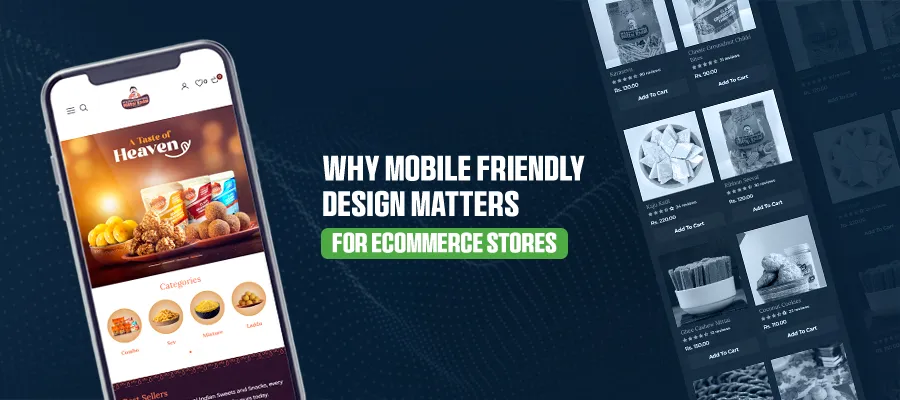
Why Mobile-Friendly Design Matters for Ecommerce Stores
March 28, 2026
Over half of all online shopping is now done on phones and tablets. People are shopping on their lunch break, shopping on their way to work, shopping in front of the TV. If your online store doesn't work on these devices, you're not losing a few sales. You're losing all of your potential sales.
Speed Matters
Mobile shoppers don't have time to wait. If it's taking more than three seconds to load your online store, they're gone. They'll find another store in one tap.
Slow Loading time is the only problem. Difficulty in navigation that requires multiple tabs to find what they want is also a problem. Checkout processes that involve extensive form filling on small keyboards also try shoppers' patience. Each second of friction increases the chance someone abandons their purchase.
The Checkout Problem
Mobile cart abandonment rates run higher than desktop for one simple reason: poorly designed checkout experiences.
Payment fields that don't trigger the right input types force extra tabs. Buttons too small to tap accurately cause errors. Return policies buried three scrolls deep create uncertainty. Each of these issues pushes customers toward the back button.
Simplifying checkout for mobile isn't optional anymore. Fewer form fields, larger buttons, prominent trust signals, and streamlined payment options directly impact whether someone completes their purchase.
Optimise images for mobile
Desktop screens have room for multiple large product images, detailed zoom functions, 360-degree views. Mobile screens don't. However, mobile users also have to view the products before they make their purchases.
If images do not load well on the browser, it annoys the users. Images appearing too small on the browser make the products look unattractive. Zooming on touchscreens does not work well. Swipe galleries that lag or jump annoy people trying to view different angles.
Product photography needs specific optimization for mobile. Faster loading, appropriate sizing, touch-friendly galleries. Get these wrong and your products fail to convince, regardless of quality or price.
Ensure Navigation Is Mobile User Friendly
Desktop shoppers might browse through categories, explore different sections, spend time discovering products. Mobile shoppers usually know what they want and need to find it immediately.
Search functions must work flawlessly on mobile. Category navigation should reach products in minimal tabs. Filters need to be accessible without cluttering small screens. Sorting options should be obvious and easy to use.
Old desktop navigation simply doesn't translate to mobile. It needs rethinking from scratch, focused on how people actually shop on phones.
Payment Methods Matter
Manually entering credit card details on a phone keyboard is difficult. Security codes get typed wrong. Billing addresses require careful attention. The whole process takes too long.
Digital wallets exist specifically to solve this problem. One tap, payment complete. Yet many ecommerce stores still don't offer these options, forcing customers through unnecessarily complex checkout flows.
Payment issues directly correlates with abandoned carts. Make it harder than necessary and people simply won't finish buying.
Trust Looks Different on Small Screens
Desktop sites have room for extensive trust signals. Security badges, detailed policies, customer reviews, guarantees. Mobile screens don't offer that luxury, but mobile shoppers still need reassurance before buying.
Trust elements must be visible without cluttering the interface.
- Security indicators near checkout buttons.
- Star ratings immediately visible on product pages.
- Return policies are findable with one tap.
These signals need strategic placement, not just desktop layouts shrunk down.
Mobile-First Means Sales-First
Some ecommerce businesses still design for desktop, then adapt for mobile afterward.
Most traffic comes from mobile now. Start there. Design the best possible mobile shopping experience first. Then scale up for desktop. This ensures your mobile site works brilliantly for the majority of your customers.
Mobile-first design focuses on essential features, streamlined navigation, and eliminating clutter. These improvements often make desktop sites better too.
The Bottom Line
Your ecommerce store needs to work flawlessly on mobile. Your customers are shopping on phones right now. If your site doesn't work for them, they'll find one that does. Your products might be better, your prices might be lower, your service might be superior. None of it matters if people can't easily shop on their phones.
Mobile-friendly design isn't about aesthetics or following trends. It's about removing friction from the buying process. Can someone find products quickly? Can they see details clearly? Can they checkout without frustration? These practical considerations determine whether mobile visitors become mobile customers.
Every day your mobile site underperforms is a day you're handing sales to competitors whose sites work properly. The cost of ignoring mobile isn't theoretical. It's showing up in your abandoned cart rate, your bounce rate, and most importantly, your revenue.
Is your ecommerce store optimized for mobile shoppers? At WeOne Digital, we design mobile-friendly e-commerce websites that turn visitors into buyers. Let's discuss optimizing your store for how people actually shop. Get in touch today.
Latest Articles
Expert advice and actionable insights to help you dominate the digital landscape.